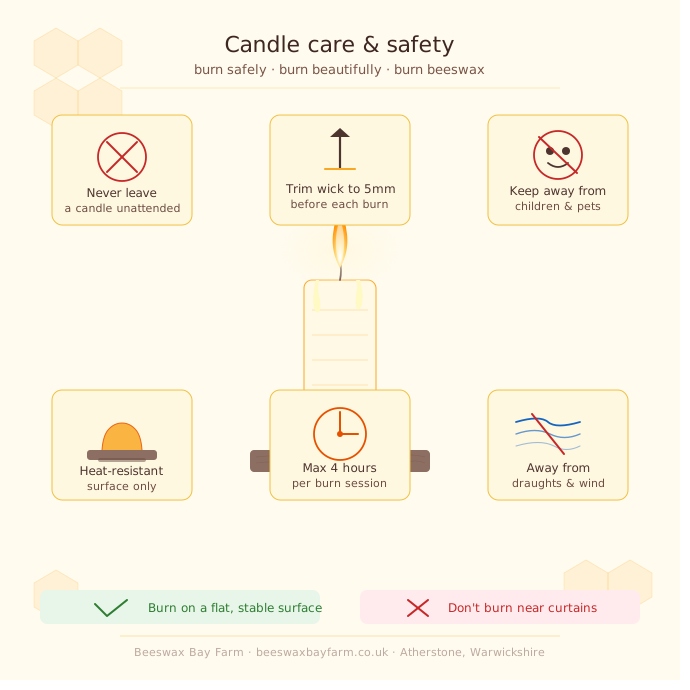
candle care & safety
At Beeswax Bay Farm every candle is hand-poured with care. To get the very best from your beeswax candle and keep your home safe, please follow these simple guidelines.
A well-cared-for beeswax candle will burn more beautifully, last significantly longer, and reward you with cleaner, steadier light from the first burn to the last. These are not complicated rules — just a few good habits that make a real difference.
Basic Safety — Please Read Before Lighting
- Never leave a burning candle unattended — always extinguish before leaving the room or going to sleep
- Keep burning candles away from draughts, open windows, vents, and air currents — these cause uneven burning and can increase the flame unpredictably
- Never touch or move a candle while the wax is liquid — both the container and the wax will be extremely hot
- Never burn a candle directly on or near anything flammable — keep well away from curtains, paper, fabric, and wooden surfaces
- Always place your candle in a suitable holder on a stable, flat, heat-resistant surface
- Keep candles out of the reach of children and pets at all times
- Keep the wax pool clean at all times — remove any wick trimmings, matches, or debris before lighting
- Ensure all candles are fully extinguished before leaving the room or going to sleep
- Stop burning your candle when approximately 1cm of wax remains — burning beyond this point can cause the holder to overheat
Wick Care — the Most Important Habit
Trimming your wick is the single most impactful thing you can do for your candle. It prevents soot, controls the size of the flame, and significantly extends burn time.
- Trim your wick to 5 to 6mm before every single burn — not just the first one
- Use a pair of wick trimmers or small scissors — a clean, straight cut is better than pinching
- After extinguishing, use a metal wick dipper or candle snuffer to push the wick gently into the melt pool, then straighten it while the wax is still warm — this prevents afterglow, eliminates smoke, and sets the wick in the correct position for the next burn
- If the wick drifts to one side during burning, gently recentre it using a metal tool while the wax is warm — do not do this while the flame is lit
- If you notice the flame becoming very large or producing black soot, extinguish the candle, allow it to cool, trim the wick, and relight
Pillar Candle Care
Pillar candles require a little extra attention to burn correctly, but reward that attention with an exceptionally long burn life.
- On the very first burn, allow your pillar candle to burn for one hour per centimetre of its diameter — this ensures the melt pool reaches edge to edge and prevents tunnelling. For example, a pillar candle 6cm in diameter should burn for at least 6 hours on its first use
- Never burn a pillar candle for more than 4 hours at a time — allow it to cool and solidify fully before relighting
- If the edges of your pillar candle begin to curl inward as it burns, gently fold them toward the centre while the wax is warm — this is called hugging and helps the candle burn evenly across the full surface
- Place pillar candles on a heatproof plate or candle tray to catch any drips — although a well-made beeswax pillar candle used correctly should drip very little
- Ensure the candle is positioned away from draughts, which are the most common cause of uneven burning in pillar candles
Tealight Candle Safety
Tealights require extra care because the foil or plastic cup becomes extremely hot during burning and can damage or melt surfaces underneath.
- Always place tealights inside a proper, non-flammable tealight holder — never directly on furniture, windowsills, wooden surfaces, or plastic
- Ensure the holder is stable and on a flat, heat-resistant surface
- Do not burn tealights in holders that are too deep — the flame needs adequate airflow
- Allow tealight cups to cool completely before handling or disposing of them
Jar and Container Candle Care
- On the first burn, allow the wax to melt all the way to the edges of the jar before extinguishing — this prevents tunnelling and ensures even burning on all subsequent uses
- Keep the wax surface clean and free of debris
- Do not burn when less than 1cm of wax remains in the jar — the jar can become dangerously hot
Storing Your Candles
Beeswax candles are one of the very few candle types that do not expire. Pure beeswax lasts indefinitely without degrading. However, correct storage will keep your candles looking their best.
- Store in a cool, dry place away from direct sunlight — prolonged exposure to sunlight can cause slight discolouration
- Your beeswax candle may develop a soft, white coating over time — this is called bloom and is a completely natural characteristic of pure beeswax. It has no effect on burn quality and can be gently buffed away with a soft cloth if preferred
- Keep candles away from strong odours — beeswax can absorb surrounding scents over time
- Store pillar candles upright to prevent warping
For a more detailed guide to storing your candles, read our blog post How to Store Beeswax Candles Properly.
A Note on Beeswax Bloom
Several customers contact us each year concerned that their candle has developed a white powdery coating. Please do not worry — this is bloom, and it is a sign of genuine, pure beeswax.
Bloom occurs because beeswax is a natural material containing trace amounts of various compounds that migrate slowly to the surface over time. It is, if anything, a mark of authenticity — mass-produced or blended candles rarely bloom because the natural compounds have been processed out of them.To remove bloom, simply buff the candle gently with a soft, dry cloth. The natural golden colour will return immediately.
Our Promise
Every candle that leaves Beeswax Bay Farm has been hand-poured in small batches and inspected before packing. We use 100% pure beeswax sourced from Devon, natural cotton wicks, and plastic-free packaging.
We want your candle to give you many hours of clean, beautiful light. Following these simple care guidelines will make sure it does.
If you have any questions about your candle, please do get in touch — you will be speaking directly with the person who made it.