The Remarkable Benefits of Eating Quail Eggs and Understanding Their Anatomy
Small in size but mighty in nutrition, quail eggs have been treasured in British kitchens and across the world for centuries. These tiny eggs are nutrient-dense, delicious, versatile, and packed with health benefits. If you have not yet added quail eggs to your diet, this might be the gentle nudge you need - or at the very least, a strong hint that your toast deserves an upgrade.
Why Quail Eggs Are a Nutritional Powerhouse
Quail eggs may be small, but compared to chicken eggs gram for gram, they contain higher concentrations of essential vitamins and minerals.
Key health benefits include:
- Higher protein content to support muscle growth and tissue repair
- A rich source of vitamin B12, important for energy levels and brain health
- Packed with iron, which supports healthy blood circulation
- Contains riboflavin (vitamin B2) to help the body convert food into energy
- Includes antioxidants that may support immune health
- A natural source of choline, which is important for liver function and memory
- Often easier to digest for people with sensitivities to larger eggs
They are a favourite among athletes, wellness lovers, and anyone who believes breakfast should do more than just fill the tank.
The Anatomy of a Quail Egg – How Each Part Benefits Your Body
Each quail egg is a beautifully designed natural nutrient capsule. The shell delivers essential minerals, the white fuels muscle and immunity, and the yolk powers the brain, heart, and energy levels.
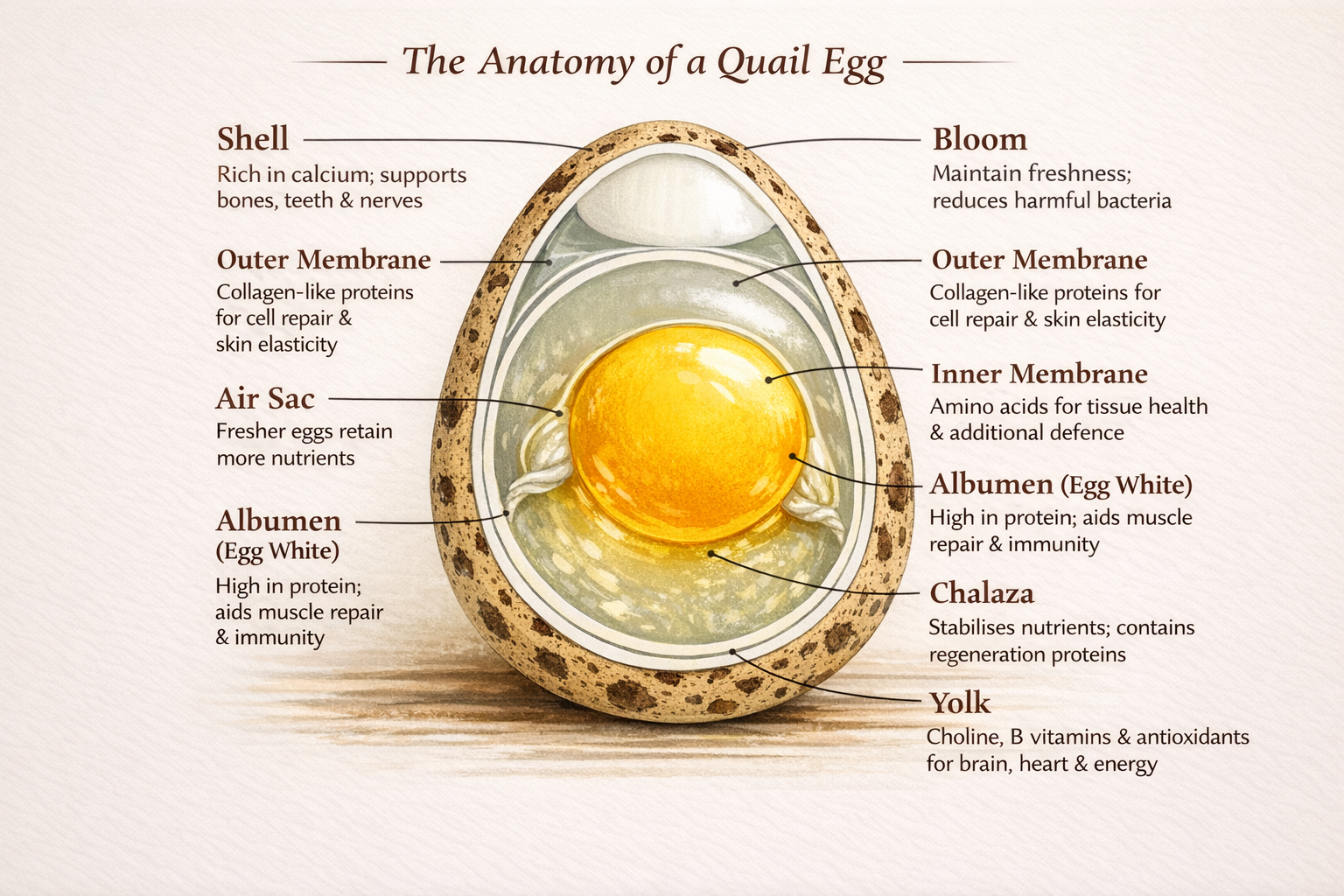
| Part of the Egg | Description | Benefit to the Human Body |
|---|---|---|
| Shell | Thin but strong, naturally porous outer layer | Rich in calcium, supporting bones, teeth, and nerve function |
| Bloom (cuticle) | Natural protective coating on the shell | Helps maintain egg freshness, reducing exposure to harmful bacteria |
| Outer membrane | Protective layer just under the shell | Contains collagen-like proteins that support cell repair and skin elasticity |
| Inner membrane | Second protective layer beneath outer membrane | Provides additional defence and contains amino acids for tissue health |
| Air sac | Small pocket of air at the wider end | Indicates freshness; fresher eggs deliver higher nutrient retention |
| Albumen (egg white) | Clear protein-rich layer surrounding the yolk | High in albumin protein for muscle repair, immunity, and healthy metabolism |
| Chalaza | Twisted strands holding the yolk centred | Stabilises nutrients and contains proteins important for foetal cell growth and overall cellular regeneration |
| Yolk | Golden centre packed with vitamins, minerals, and healthy fats | Rich in B vitamins, iron, antioxidants, and choline for brain, heart, and energy support |
Put simply - it’s nature’s way of saying: “Small, but important.”
How to Enjoy Quail Eggs at Home
Quail eggs are incredibly versatile. They can be:
- Soft boiled and served on toast
- Added to salads for extra protein
- Pickled for charcuterie boards
- Used in baking and pastries
- Served as canapés in hospitality settings
Their flavour is often described as richer and slightly creamier than chicken eggs, with a higher yolk-to-white ratio.
Final Thoughts
Quail eggs are one of nature’s smallest nutrient packages, delivering high protein, essential vitamins, iron, and antioxidants. Shell colour, whether standard or blue, adds visual charm but does not diminish quality. If you are seeking natural nutrition, sustainable food sources, or artisan eggs to elevate your culinary creations, quail eggs are a superb choice.
Looking for a natural, nutritious addition to your home or business gifting hampers? Quail eggs are a brilliant conversation starter, a stunning artisan food option, and a meaningful gift for food lovers and smallholders alike.
Browse our handmade gifts and natural farm products at: https://www.beeswaxbayfarm.co.uk/shop/farm-quails-eggs